One of the most unsettling aspects of Pluribus is that nothing is obviously wrong with Carol’s environment. Her physical needs are met. She is protected from harm. By conventional standards, she is being “kept safe.” And yet, she unravels. The show exposes a critical flaw in how we think about care: safety without agency is not neutral. It is coercive.
This matters deeply in the context of autism, where support is often defined in terms of safety, regulation, and risk management rather than autonomy, consent, or relational trust. In school settings, agency means having meaningful choice over one’s body, environment, and participation, including the ability to leave a space, access support, and know what conditions govern return. When those elements are removed, even well-resourced environments become destabilizing.
This same logic underlies the continued use of seclusion in schools for autistic students—not voluntary withdrawal chosen by the student, but imposed isolation controlled by adults—framed as protection or regulation, yet functioning as containment and behavioral control.
Once agency is understood this way, not as independence, but as predictable control over one’s body, environment, and exit, it becomes easier to see why seclusion remains such a fraught practice in schools. What is presented as a neutral safety measure often removes precisely the elements that make regulation possible. The issue is not that students are separated from stimulation, but that separation is imposed, time-bound by adult judgment, and contingent on behavioral compliance rather than internal readiness.
Research and policy reviews consistently show that seclusion does not improve long-term behavior, emotional regulation, or school engagement for autistic students. Instead, it is associated with increased distress, escalation over time, trauma responses, and erosion of trust between students and staff. These outcomes are not limited to extreme cases or unsafe conditions; they occur even when seclusion rooms are quiet, monitored, and intended to be brief. The determining factor is not the physical environment, but the loss of control over entry, duration, and release, conditions that reliably activate threat responses rather than restore regulation.
Educators and administrators don’t set out to use seclusion with the intent to harm. Educational professionals frame the “safe room/buddy room” as a last resort, a protective measure, or a way to prevent escalation. However, intent does not determine impact. From the perspective of the nervous system, what matters is how isolation is experienced, not why it occurs. When a student is removed from a space without consent, denied clear information about duration, and required to demonstrate behavioral compliance to regain access, the experience is processed as loss of control rather than support. Over time, this erodes trust, increases anticipatory anxiety, and teaches students that regulation is something done to them, not with them.
This is the same dynamic Pluribus makes visible: care that prioritizes management over meaning may remain well-intended, but it is still coercive. And coercion, even when quiet, accumulates.
I would like to distinguish between seclusion and voluntary sensory withdrawal, as they are often conflated in policy and practice. Voluntary withdrawal occurs when a student chooses to step away, knows where they are going, understands how long they might stay, and can return without needing permission or demonstrating compliance. The function is self-regulation. The control remains with the student.
Seclusion, by contrast, removes choice at every critical point. Entry is imposed, duration is determined by adults, and return is conditional. Even when the space is calm and staff are present, the defining feature is not quiet. The defining feature is containment. One restores autonomy; the other suspends it. Treating these as equivalent obscures the very mechanism that determines whether separation supports regulation or produces harm.
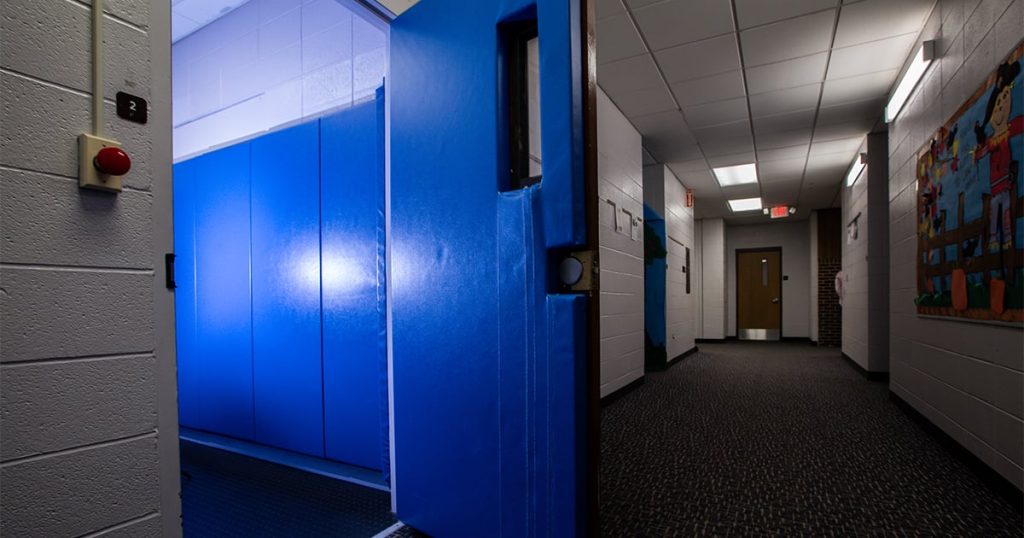
Safety in schools is often defined narrowly: the absence of physical harm, disruption, or liability. But for autistic students, safety also includes psychological integrity: the assurance that one’s body, autonomy, and internal states will not be overridden in the name of compliance. A student can be physically unharmed and still experience an environment as unsafe if their access to movement, communication, and exit is controlled by others.
When safety is defined without psychological integrity, containment becomes justifiable. Seclusion can then be framed as calming, regulated, or even therapeutic, despite removing the very conditions that allow regulation to occur. True safety is not achieved by limiting a student’s options until behavior stops. True safety is achieved by expanding options in ways that preserve dignity, predictability, and trust.
This reframing does not lower standards for safety. It raises them, asking whether a practice protects not only bodies, but also agency.
Pluribus is unsettling precisely because it refuses an easy explanation. Carol does not deteriorate because her needs are ignored. She deteriorates because her world, however carefully constructed, leaves no room for self-direction or escape. The harm is not immediate, rather it is cumulative.
That same dynamic plays out, on a smaller scale, when autistic students are placed in seclusion under the logic of safety. The absence of chaos is mistaken for wellbeing. Quiet is mistaken for calm. Compliance is mistaken for regulation.
The lesson is not that support fails, but that support without agency is incomplete. Whether in speculative fiction or real classrooms, containment masquerading as care produces the same outcome: a slow erosion of trust, coherence, and psychological safety. If we are serious about keeping students safe, we must be willing to ask a harder question, not whether isolation works, but what it costs.


"*" indicates required fields
"*" indicates required fields

